Monday, May 9, 2011

Bremen Depot Rededicated


This is the last in a series about the Bremen B&O Depot that was rededicated on May 1st under sunny skies with the Bremen Band playing to a crowd of over 120 well-wishers.

The Bremen depot was located on one of several historical railroads in Marshall County. These include the Pennsylvania Railroad (or Pittsburg-Ft. Wayne-Chicago) that runs east/west through the center of the county through the communities of Bourbon, Inwood, Plymouth, and Donaldson. The Vandalia Railroad and the former Nickel Plate Railroad (or Lake Erie-Western) also were located in the county and essentially ran north/south through the communities of Argos, Plymouth, and Tyner (Nickel Plate) and Culver, Plymouth, and LaPaz (Vandalia). Another east/west railroad (New York-Chicago-St. Louis) is located in the southern part of the county and goes through the communities of Tippecanoe, Argos, and Burr Oak. The railroad also went through a number of small railroad villages that never developed full railroad stations.

Bremen’s depot is one of only four train depots that remain in Marshall County. The Pennsylvania Station and Nickel Plate Depot both exist in Plymouth. The Pennsylvania Station is a brick building constructed in 1914 and the Nickel Plate Depot was constructed in 1889 in the Stick Style. Both of these buildings are used for railroad storage and unfortunately are in deteriorating condition. Culver’s Vandalia Railroad Station was constructed in about 1925. It has been converted to a meeting hall for the Culver Lions organization. The other county’s depots, most of them small wooden structures, have been demolished.

In 1914 there were 123 depots on the three B&O lines through Indiana; the number had dropped to 27 by 1986. About the same time there were only 11 depots remaining on the Chicago (Bremen) line of the B&O. The B&O Railroad constructed wood depots in LaPaz and Teegarden west of Bremen in Marshall County; these no longer exist. West of Marshall County the B&O Railroad constructed wood depots in Walkerton, Miller and other smaller communities prior to the rails’ junction with the Grand Trunk leading into Chicago. Only the Miller depot, constructed in 1910, exists; it has been renovated and is in use as a restaurant. Gary’s Union Station, a large Classical Revival building, was constructed by the B&O in 1910 and remains today.

East of Bremen the Baltimore & Ohio Railroad constructed a depot in Nappanee in 1910 and remains an active passenger station. East of Nappanee the next B&O town was Syracuse. It retains its historic depot that was constructed in 1913 in much the same style as Nappanee’s depot; it is in deteriorating condition. East of Syracuse a wood depot was constructed in Wawasee in 1908; it was relocated to Benton, IN. East of Wawasee only two other B&O depots remain in Indiana. One is in Garrett, a town founded by the Baltimore & Ohio Railroad and named for its president; the building is the railroad’s freight depot constructed as a simple side gabled building in about 1910. The other is the Auburn Junction Depot that was constructed about the time the B&O Railroad was constructed through Indiana, in 1874. It was built in the Italianate style and relocated from its original site. Most of the remaining B&O depots in Indiana date to the infrastructure improvements between 1910 and 1917; Bremen’s construction in 1929 came considerably later.


Many congratulations to the folks in Bremen and with Historic Bremen, Inc. for the restoration of yet another Marshall County landmark.

Saturday, April 30, 2011

Bremen Depot: part II


Second in a series on the Bremen Depot in celebration for its rededication Sunday, May 1st.


Having a new depot constructed by the railroad was termed a “long dream” by the town when a committee of business men met with high officials of the railroad in 1928. By the end of this meeting railroad officials had given their “unqualified assurance” that the company would build a new depot that would be considered “modern and adequate”. Work would start as soon as plans presented by the railroad were modified based upon suggestions by the committee at the meeting. The plans presented by the railroad appear to have been proposed to the town prior to the meeting and were referred to as “original plans of several years ago”. It is unclear why the railroad had not constructed the depot prior to this time. The original drawing of the depot as proposed by the railroad was virtually identical to what was constructed with the exception of porticos constructed on each side over the entries.

It appears that the town of Bremen requested the addition of the porticos, probably for the purpose of sheltering passengers entering and exiting the building. No doubt the town also adhered to the thought proposed by Clay Lancaster in his book Waiting for the 5:05: Terminal, Station and Depot in America, “The train station was the image of the community, presenting at a glance something about its size, affluence, livelihood and social range of its citizens, their taste in architecture.” It appears the townspeople took image seriously when the portico additions were made to the original drawings. A newspaper article stated that the new depot would compare favorably with anything else located on the rail line. The appearance of the building was positively commented on in succeeding newspaper articles as well as its superior and virtually fire-proof construction. A review of other buildings constructed in the community at the time of the depot’s design and construction shows only one in a comparative style and level of detail found in the depot. If the committee of business men were looking for a visual precedent from which to draw inspiration for the addition of the porticos the bank building at the southwest corner of Plymouth and Center Streets may have provided this. It was constructed only a few years previously in a neoclassical design with fluted columns flanking the front entry. It was restored and now serves as the town hall.

There has been no success in making a determination of who designed the depot. The name R Ramsay Smith with a copyright mark is located on the original rendering of the depot prior to the inclusion of porticos (1928); however Smith may have only been responsible for the rendering. In an article written about the dedication of the depot RF Everet was listed as one of the railroad officials, and as the Building Engineer located out of the B&O Railroad’s Garrett office. However, it is indeterminate if Everet was the design engineer or a supervising engineer for the railroad. During the period in which the Bremen depot was redesigned and constructed the B&O Railroad’s Chief Engineer was HA Lane, their Engineer of Building was LP Kimball, and their Engineer of Construction was AM Kinsman. The B&O Railroad used the term “Engineer of Buildings” for the head of their design division, but it is indeterminate if Kimball designed the Bremen depot, though he has been credited with the design of other depots. Both Lane and Kimball are referenced in these positions as early as 1922 and Kinsman as early as 1905.

Construction began on the new passenger depot in April, 1929 by a local contractor, S. G. Lehr; the old depot was to be used as a freight house. The new depot was dedicated on October 22, 1929. The dedication was a formal event with high-ranking representatives from the Baltimore and Ohio Railroad, local officials, and American Radiator officials. The Bremen Kiwanis Club organized the event that included a brief tour of the town, speeches, music, and a banquet at the Arco Hotel. The depot’s use followed the declining use of the railroad as the automobile became the preferred method of transportation. The new depot served the town for forty years with passenger service until it ceased in 1971 and was used only as a railroad office. That use ended in 1987 with the transfer of the railroad’s last station manager from this location, Melvere Sheley. The Baltimore & Ohio Railroad retained its identity until 1986; the railroad through Bremen is an active line currently operated by CSX.

Saturday, April 23, 2011

The Bremen Depot


Part 1 of a 3 part series celebrating the Bremen Depot restoration & rededication to be held on May 1st. Congratulations Historic Bremen!


Baltimore & Ohio Railroad History
The Baltimore and Ohio Railroad is the oldest mainline railroad in the United States. It traces its history to a committee of business men assembled at a Baltimore, Maryland residence in 1827. The men assembled weighed the options of canals, turnpikes, and railroads as the best means to open the city to markets in the developing western states by way of the Ohio River. It was established that a railroad was far more cost-effective than the construction of a canal, and that Baltimore had a considerable advantage since it was closer to the Ohio River than either Philadelphia or New York City. The committee requested a charter for a stock company to be known as the Baltimore and Ohio Railroad from the Maryland legislature in the same year. The legislature granted the charter with a capital stock of $3 million dollars. A survey for the route was undertaken in 1827 and in great fanfare a cornerstone was laid by Charles Carroll, the last surviving signer of the Declaration of Independence, to initiate the construction of the railroad on July 4, 1828.

After the Baltimore & Ohio Railroad reached the Ohio River, it began to set its sights further west which ultimately would include three routes through Indiana. The first two routes were constructed through southern and central Indiana in 1857 and 1852, respectively. The Civil War interrupted additional construction on the railroad, but demonstrated the importance of having a functioning system of rails as a national supply route. John W. Garrett, president of the B&O Railroad, immediately set plans into place following the end of the war to reach more markets with the railroad. Garrett eyed Chicago as an important destination for markets on the east to reach and commenced the construction of the B&O Railroad through northern Indiana from Pittsburg west to Chicago, becoming known as the Baltimore, Pittsburg, Chicago Railroad, in 1871. By the fall of 1872 a 260 mile grade had been established from a point on the Lake Erie Division ninety miles north of Newark west to Chicago. During 1873 most of the track had been laid between Chicago Junction on the Lake Erie Division and Deshler, Ohio, 63 miles to the west. The remaining 200 miles of track was laid between Deshler and Baltimore Junction, Illinois in 1874. The final track was laid on November 15, 1874 and the line was officially open for traffic on November 23. B&O passenger trains used the Illinois Central line coming into Chicago while freight trains used the Eastern Trunk line. The first year of operation showed revenue at nearly $1 million dollars and a deficit of $126,000. However the following year net earnings reach $167,000.

The northern route of the Baltimore & Ohio Railroad passed through Bremen on the north side of the town approximately three blocks from the original plat of Bremen between the town and its burial ground. The main street of Bremen (today SR 106) was an east/west street named Plymouth Street that was crossed at the center of the downtown by “Center Street”. Center Street connected the downtown with the railroad, industrial grounds, and the burial ground on the north side of town via a bridge constructed over a fork in the Yellow River. The railroad was located just north of the river, paralleling it for a short distance before it crossed the river west of Center Street, paralleling it again but on its south side. The depot grounds were established by the railroad on each side of Center Street, north of the track. The railroad originally constructed a simple wood framed depot on the west side of Center Street and north of the track; it acted as a passenger station, freight office and Western Union office. Two streets west of the original plat were named in honor of the railroad’s origin: Baltimore and Maryland Streets.

The 1908 plat map of the town shows the importance of the railroad to the development of the community. New plats were created north of the railroad along Center Street. Huff’s Addition with “Railroad Street” was created north of the depot on the west side of Center Street and “Manufactures Addition” was created on the east side of Center Street, north of the radiator company. The depot grounds on the east side of Center Street had considerably more development including an elevated wood water tank and tool house. A rail spur also connected a grain elevator, stock pens, and pickle shed on the east grounds as shown in the 1908 plat of the town. The same plat shows a spur connecting the Holland Radiator Company north of the elevator with a coke and sand shed and warehouse located between the two. A second elevator was located on the west side of Center Street, north of the depot. Another short spur connected a brewing company to the track in the northwest corner of the town.

The 1922 plat of the town shows little change in the buildings on the depot grounds, but considerably more development of the radiator company, then called “American Radiator Company”. The plant appears significantly larger in footprint than in 1908 and had two other spurs entering the building. The company was also named in the creation of a re-plat of a portion of Manufactures Addition north of the company and had constructed its own hotel north of the depot named the “Arco Hotel”. The 1922 plat also shows an engineered realignment of the fork of the Yellow River, now called Armey Ditch (also written Army), which provided more land between the south side of the railroad and the ditch on each side of Center Street. The railroad took advantage of this in 1929 when it replaced the original depot on the north side of the track with a new depot between the ditch and the south side of the railroad on the same side of Center Street.

A wave of new infrastructure improvements by the B&O Railroad resulted in several new depots constructed along its lines between 1910 and 1917; these included new depots designed in period styles located in Nappanee, Syracuse, and a large depot in Gary. However Bremen, a town similar in size to Syracuse and Nappanee, was not included in these improvements and maintained its original wood, rather non-descript depot.

Saturday, April 16, 2011

Barber School Part II

Part 2 of a series on the Barber School, Polk Township
In 1840 Marshall County had forty school-age children, twenty-five of whom attended subscription schools. There were only three schoolhouses in the county at that time. In 1848 the State of Indiana allowed voters to decide if education should be made available free to the public. Marshall County residents voted 619 in favor and 86 against. The state constitution was amended to include Article VIII providing for tax dollars to be used for the free education of the public’s children. After its adoption rural schools began to develop rapidly in Marshall County, keeping pace with the settlement of the area. By 1858 the number of schoolhouses had grown from 3 in 1840 to 69. In 1862 there were 84 schools, in 1868 there were 116 schools, and by 1879 there were 132. The total enumeration had grown from 3,880 students in 1856 to 8,386 in 1879. Districts schools were typically positioned to allow students to not need to walk any further than about one mile, and they were frequently on land donated by a farming family under the condition the land would revert back to the family if there was no longer school conducted on the land.


An 1850 map of the school district lines in Polk Township shows a total of nine districts. In 1852 Stephen Butler conveyed a piece of land in the northwest corner of section 33 for use as a school site in District No. 2, Polk Township. Butler included a provision that the building could be used by Methodists, United Brethren, Baptists, Carmelites, Presbyterians, Universalists, and religious uses, and should it ever stop being used for school purposes it would revert back to him. Other records state that the first schoolhouse, made of logs, was constructed on the Joshua Barber farm in the 1850s. It was located near the center of Section 33 at its northern boundary (on the southeast corner of present U.S 6 and Sage Road). This may be the same building. In 1864 the trustee ordered the construction of a new frame building which remained in the same general location on the Barber farm. The “Barber School” remained at this location until the new school was constructed southwest of it in 1901. The prior schoolhouses no longer exist. The frame building was listed as District No. 2 Schoolhouse on an 1880 plat of the township and located on the Albert Barber farm. The building also appears at this location in the 1872 and 1876 plats; it was also used as a church and community hall for debates, literary purposes, and spelling bees. By 1880 Polk Township had developed ten district schools with a total value of $3,300. The number of school districts increased to twelve by 1887, then back to ten just prior to school consolidation. Statistics from 1880 show there were 490 students enrolled in the district schools of Polk Township. The Barber School hosted the first grade school commencement in 1887. It was coordinated by township trustee Myron Chase and cost $2.00 to conduct. Joshua Barber became a school teacher in the township system of schools.


The Walkerton Independent stated in 1901 that (Polk Township) Trustee (Edwin R.) Monroe was contemplating building a new school house in the Barber settlement on Wesley Ruple’s farm near his residence, with the patron’s consent. Plans for the new building moved forward and Monroe revealed the bids taken to the Walkerton Independent. Frank Bennett received the contract for carpentry work for $114.50. Laying of brick was awarded to H. P. Mead at $6.50 per cord and stone masonry and plastering were awarded to Joe Burnside for $3 per cord (stone) and 7 cents per square yard (plaster). Two bids for building the school completely were rejected; they were for the sums of $1,390 and $1,196. The new building was completed about five weeks into the new school year with classes commencing on November 11, 1901. The new District No. 2 school retained the Barber name but was located at the northeast corner of Tamarack and 2A Roads, southwest of the former location; the old school was sold at public auction to Sanford Sheaks for $41.00. The new school appears on the 1908 and 1922 plats of Polk Township. A photograph from about 1908-1910 shows 27 students gathered outside the school with their teacher, Homer Burke. A photo from 1920 shows 17 students gathered in front of the building with their teacher, Carl Ketchum.


The desire to have modern utilities for school facilities, such as gas and electric, led to the establishment of consolidated schools in population centers. There was also an increased desire to provide higher grades than what was offered in the rural district schools. This was true in Polk Township where the first high school was located in Tyner in 1899, with the first graduating class, with 10 graduates, occurring in 1902. The Tyner School had expansions in 1912 and 1928 to accommodate consolidation. A school was also constructed in Teegarden in 1915 to accommodate the closure of District Schools #1 through #4, which included the Barber School, though evidence suggests the Barber School continued to be used into the early 1920s. The new Teegarden School burned in 1924 and it was replaced with a grade school only in 1925. Upper grades were offered at the Tyner and Walkerton Schools. After the use of the Barber School ceased for education, evidence suggests that the building was used for storage of grain or other agricultural purposes by the farmer who reclaimed ownership. Today the Barber School stands as a quiet reminder of those one room schoolhouse days complete with coat hooks and wood shelves for lunch pails. It is probably the finest little one room schoolhouse remaining in Marshall County.

Tuesday, April 12, 2011

the Barber School


Part 1 of a 2 part series on Polk Township District No. 2 school house, also known as the Barber School. The Barber School has been on Wythougan's Top 20 Heritage Sites List since its inception in 2000.


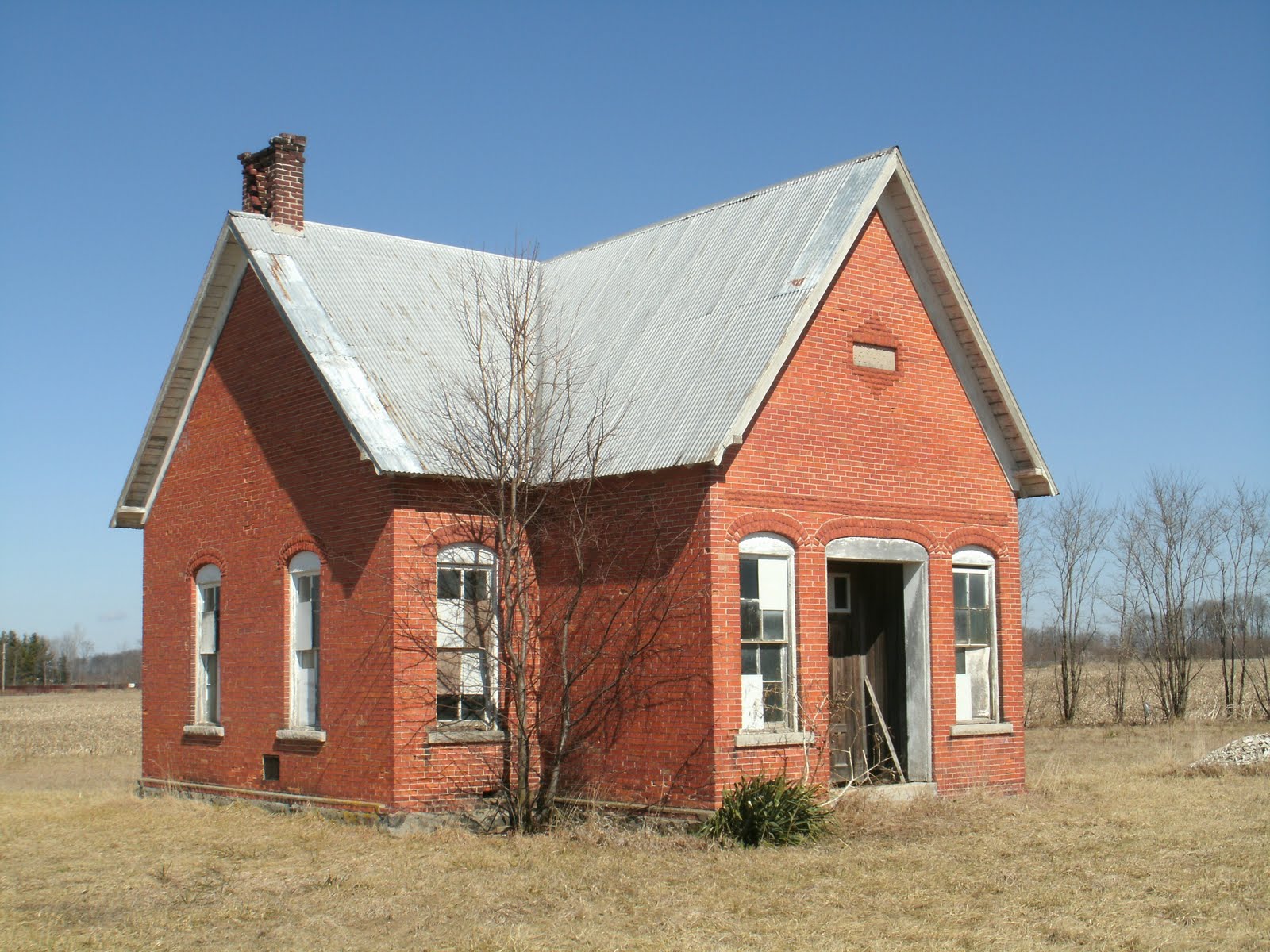
The Barber Family, the name associated with the school, came to Polk Township in 1847, just two years after its incorporation. Joshua T. Barber was born March 26, 1810 in Washington County, New York where later he married Mary O’Dell. They moved with their first four children to Marshall County via the Erie Canal, then overland through Ohio. He filed his land claim in Section 33 of Polk Township in 1848. The name is also spelled Barbour and Barbur in some records. The four children who accompanied them on the move were Charles (Leonora Strom), John (Emily Myers), Ann Eliza (Izaak Sheeks), and Albert (Sarah Reynolds). Three additional children were born to Joshua and Mary in Marshall County; they were Julia Catherine (Davis), and twins Delia (Carder), and Daniel (Mary Martin). The Barber homestead was located on Sage Road, south of present U.S. 6.


The area they settled became known as the “Barber Neighborhood” and a family cemetery and a Brethren church were established on 2A Road, just south of the original Barber School location and just east of the current District No. 2 Schoolhouse. The condition of the Barber Neighborhood in 1858 was described as almost a wilderness, with no drainage, and no established roads or railroads, and the settlers had to raise their crops among stumps. The Barber Cemetery was established in 1870 for the use of farming families; the first interment was Macelia Ramsbey, a child who died in 1867. The church was known as the Barber Evangelical United Brethren Church; it was constructed in 1878 and was closed in 1923. The church is no longer existing, but the Barber Cemetery remains an active burial ground. Joshua Barber died in 1874 and Mary died in 1878; both are buried at the family cemetery. Over a dozen members of the Barber family are buried in the cemetery spanning several generations including several of Joshua’s children.


Besides the Barber School only one other district school remains in Polk Township. It is the District No. 8 School that was constructed in 1895 on West 1st Road, approximately one mile northeast of the District No. 2 School. It is a brick building that is nearly identical to the District No. 2 School in terms of its T-plan configuration. It is plausible both schools were constructed by the same contractor given their similarities, proximity, and frequent occurrence of this practice in townships. The two larger schools in Polk Township into which the District Schools were consolidated were the Tyner and Teegarden Schools. The Tyner School was constructed in about 1900 and was enlarged in 1912 and in 1928 to accommodate consolidation. The Teegarden School was constructed in 1925 also to accommodate consolidation. Both consolidated schools have been razed.

Saturday, April 2, 2011

Bremen Water Tower, part 2


An article in the Bremen Enquirer on October 21, 1892 celebrated the new water works completed by the town which included the historic "standpipe". Touting the town’s progressive approach to public water service the article headline states “Bremen sends greetings to her sister towns with the injunction-Go and Do Likewise”. The only other Marshall County community with a public water system at that time was Plymouth, the county seat, who had established a system in 1888. Discussions for the Bremen system began early in 1891 and townspeople were invited to vote to show their support for the system. An overwhelming majority voted in favor of a public water system and the town board pursued the development of engineering drawings.


The project included an engine house which was constructed on the east side of North Center Street, just south of the fork of the Yellow River. The land was purchased from E. J. Thompson and was “cleared of all rubbish, filled up and beautified so that it will make a fine park in a few years.” The work on the ground was completed by John Foltz, who became the water works engineer. This land became a park in the early part of the 20th century and today is known as Shadyside Park. The engine house was a simple gable-front building constructed out of wood with Stick-style eave brackets and decorative trusses in the gables. A tall smokestack was located in the roof’s ridge. James Madden is listed as the contractor; however Samuel Lebr, George Shock, and John Bixler are credited with the carpentry work. Painting of the building was completed by C. E. Koontz and H. A. Place. The building was called “beautiful” and its workmanship “first class in every respect”. The supply of water was generated from pumps connected to seven artesian wells without the use of cisterns for storage. The boiler in the engine house was supplied by Madden with the inscription “Bremen Water Works, James Madden Contractor, Fort Wayne, Indiana, 1892”. The engine house was replaced with a new electrical powerhouse in 1937. It was a Works Progress Administration project and is located at 123 East Mill Street, just north of the former location. That building is still in use by the town. The standpipe was constructed on South Jackson Street, approximately three blocks north and one block west of the engine house near the center of the historic commercial district. The standpipe was designed with some embellishments that include Gothic arched doorway and window openings and a decorative railing crowning the top of the tank. The brick for the tower’s base came from Nappanee and the masonry work was completed by masons from Goshen and Nappanee.


The newspaper article celebrating the completion of the water works described the extension of the pipe line along the town’s principle streets and hydrants being placed so that with the amount of fire hose the town owns any house can be reached in case of fire. The water works were put into operation on August 11th and at the time of the article on October 21, 1892 over 100 people were being served. It was estimated within another year’s time every house would be connected to the system. The article predicts that the water works would attract strangers to the community and a new era of prosperity would be opened for the community. The construction of the radiator manufacturing facility north of the railroad tracks was touted as a direct benefit of the new water works system.


A new water tank on the west side of the town was put into service in 1956; however the historic standpipe had become a landmark for the community and was left intact. In 1975 the standpipe was named an American Historic Water Landmark and between 1988 and 1989 the Town of Bremen fully restored the structure. The standpipe’s image is continually used by community organizations and the municipality as an icon for the Town of Bremen.

Saturday, March 26, 2011

Bremen Water Tower


Part 1 of a 2 part series on the Historic Bremen Standpipe

The Bremen Water Tower, historically known as “the standpipe” is an unusually well-preserved example of a structure supporting early municipal services, in this case public water. The standpipe has a tall slender brick base 68' tall crafted with Gothic Revival details that supports a tall slender steel tank, 36' tall. The tower was constructed in 1892 and was taken out of service by the community in 1955. Though removed from service, it has become a beloved community icon and was named an American Historic Water Landmark in 1975. It was fully restored between the years 1988 and 1989.

The town of Bremen by the late 1800s was developing with the growing need for a better public water system. The town contracted with an accomplished engineer from Chicago for the design of new water works station and standpipe. George C. Morgan engineered the system and James D. Madden, a Fort Wayne contractor, constructed the facilities. Neither Morgan nor Madden were unfamiliar with public works projects.

George Cadogan Morgan was an accomplished engineer specializing in water hydraulic developments for municipalities. Morgan was a member of a family involved in early American engineering and surveying, particularly related to the railroads; his father was Richard Price Morgan. George C. Morgan was a master mechanic for the Fort Wayne-Chicago Railroad and was responsible for the construction of water tanks along the route. Morgan came to Chicago during the 1860s and worked on the city’s first iron bridge, the 18th Street Bridge, in 1868. He is found in the 1876 Chicago city directory under George C. Morgan, civil engineer. His office was located in the Major Block and his residence was at 389 West Adams Street. Morgan was best known for his development of municipal water works in small towns throughout the Midwest which included steel standpipe construction for the public reservoir of water.

Morgan’s water works throughout the Midwest was extensive. A review of available sources, primarily various issues of Engineering News and the Manual of American water works, show 34 Morgan-designed standpipe water works systems between 1888 and about 1907, including Bremen’s constructed in 1892. These were located primarily in Illinois, but also in Michigan, Iowa, Louisiana, New York, Indiana, Missouri, Tennessee, and Kentucky. In a few locations the standpipe is called “a Morgan’s Tower” or “Morgan Special”; whether officially or informally in the minds of the public Morgan had trademarked his standpipe design. In Indiana Morgan designed standpipes in Shelbyville, Delphi, Fulton, Rockville, Bremen, and Bloomfield. The first references found regarding Morgan’s standpipe design is in 1888 with tower construction in Washington and Hoopeston, Illinois. Morgan designed Bremen’s standpipe to have a 68’ brick base with a 12’ x 36’ tall steel water tank. This general design seemed to be popular and easily adapted for other municipal systems. The most similarly sized standpipes were in Delphi, Indiana (11 ½’ x 36’ tall tank on a brick base, constructed in 1891-92) and Hoopeston, Illinois (10’ x 36’ tall tank and a 68’ brick base, constructed in 1888). Several other standpipes were also constructed on 68’ bases but had 48’ tall tanks; these were found in Lexington, Farmer City, Macomb, Grinnell, Monticello, Galva, Illinois and Indianola, Iowa. A standpipe in Caruthersville, MO, listed on the National Register of Historic Places in 1982, has a strong resemblance to Bremen’s including the Gothic arched openings in its brick base and decorative metal railing at the top of the tank; it was constructed in 1902.

Illness forced Morgan’s retirement in 1900 though some of his work is found a few years after this date. His wife passed away in 1900, but he remained at his 389 West Adams Street residence and died in 1913. His nephew, Arthur Marshall Morgan, who had joined his uncle in his practice in 1881, continued the business.

James D Madden was born in 1856 in County Derry, Ireland and came to the United States at seventeen years of age. He apprenticed in Philadelphia with a firm named Hoolihan & Barry for five years until 1878 when he opened his own shop in Philadelphia. Two years later he moved to Fort Wayne, Indiana and began his plumber’s trade in that city. An 1889 history described Madden as a prominent plumber and the proprietor of a handsome plumbing establishment at 101 Calhoun Street. The biographical information on Madden found in a Bremen Enquirer article concerning the newly constructed water works varies slightly. It stated that upon arriving in America Madden first engaged in the plumbing and water works business under the firm of Ludlow & Co. in Philadelphia and in 1876 was named Superintendant of the York, PA water works. The article states that he moved to Fort Wayne in 1880 and established his business in 1885. Madden constructed his first water works plant at the Eastern Insane Hospital of Indiana in 1889. He constructed the state plant in Fort Wayne, and plants in North and South Evanston, Illinois. Madden also constructed the water tower in Nappanee in 1893. The tower consisted of a tank 24’ x 20’ tall on a tower 70’ tall, all constructed out of yellow pine. The engineer for that design was Fairbanks, Morse, & Co., of Chicago. Madden and Morgan apparently competed for contracts on the construction of water works at least in one occurrence. A water works development in Hinsdale, Illinois had received bids from GC Morgan of Chicago in the amount of $33,908 and from James Madden of Ft. Wayne in the amount of $36,450.